Hey everyone, if you’ve ever dabbled in water treatment, desalination, or even industrial fluid processing, you’ve probably heard the term “high pressure membrane” thrown around. But here’s the thing that no one talks about enough: mechanical strength. Like, how the heck do these super-thin, porous sheets hold up when you’re shoving 1,000+ PSI of fluid through them? As someone who’s been in the high pressure membrane game for over 8 years—yeah, I’m the lead engineer and part owner of that membrane shop you might’ve seen popping up in desal plant forums—this is the question I get at least 10 times a week from new operators, plant managers, and even other membrane suppliers who still don’t nail the basics. Let’s break this down, no fancy jargon, just real-world stuff that matters. High Pressure Membrane
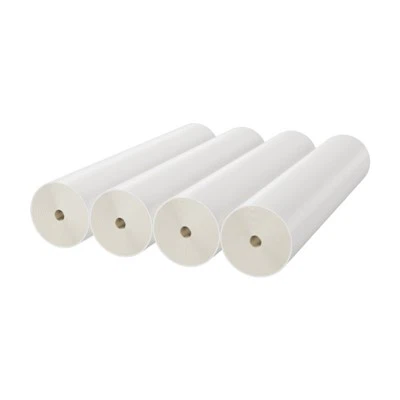
First, let’s get one thing straight: mechanical strength isn’t some vague “sturdiness” buzzword. It’s the exact measurement of how much stress a membrane can take before it breaks, tears, starts leaking, or just stops working like it’s supposed to. For high pressure membranes, that stress comes from two main places: the pressure you’re pushing through the membrane (transmembrane pressure, or TMP for short—we use that abbreviation every day, so get used to it) and the tension from how you mount it in the system. If a membrane can’t handle that, you’re looking at downtime, replacement costs that’ll make your CFO cry, and maybe even a whole batch of spoiled product water. I’ve seen so many plants burn through membrane sets in 6 months because they bought cheap ones that couldn’t handle the pressure, and that’s why we built our shop to fix that exact problem.
Let’s start with the core components that make a high pressure membrane strong. Not all membranes are cut from the same cloth, right? For most high pressure applications—think seawater desalination, brackish water reverse osmosis (RO), or even industrial heavy metal removal—we use thin-film composite (TFC) membranes. The “composite” part is key here, because it’s three layers stacked together for different jobs: a super-thin polyamide top layer (that’s the one that actually filters out salt or contaminants), a porous polysulfone middle layer (adds a bit of structure but mostly lets water pass through), and a non-woven fabric backing (this is the backbone, the stuff that takes the real mechanical beatings).
Wait, the backing is where most mistakes happen, trust me. A lot of low-cost membrane makers skimp on the backing material to cut costs. They use thin, flimsy non-woven fabric that falls apart under high pressure, or even worse, use a polyester blend that stretches way too much when you crank up the TMP. Our membranes? We use a high-tenacity polypropylene backing that’s been tested to not stretch more than 1% even at 1,500 PSI. Why does that matter? If a membrane stretches more than that, the pores get distorted. Suddenly, you’re letting more salt through, or the membrane starts to bow and rub against the housing seals, which leads to tears. I’ve had a customer last year tell me their old membranes stretched 5% under operating pressure—we fixed that right away with our product, and their salt rejection went from 98% back to 99.6% within a week. It’s not just about not breaking; it’s about keeping the membrane working as it’s designed to.
Now, let’s talk about the actual numbers. What’s the mechanical strength of a good high pressure membrane? I’m not gonna throw out a random number—let’s use real operating conditions, because that’s what matters, not lab tests. For seawater RO (SWRO), which is the most common high pressure application, standard operating TMP is around 1,000 to 1,200 PSI. A high quality TFC membrane should have a burst strength (that’s the maximum pressure it can take before rupturing) of at least 1,800 PSI, and our membranes test at 2,100 PSI. Wait, that’s a buffer, right? We build in a 75% safety factor, which is non-negotiable for us. Why? Because plants don’t always run at perfect conditions. If a pump surges, or there’s a slight pressure spike when you start up the system, you don’t want your membrane to fail because it was only rated for exactly the operating pressure. I’ve seen a plant in Florida have a pump surge hit 1,700 PSI—their old membranes (which only had a 1,600 PSI burst strength) all ruptured, and they had to shut down for 2 weeks to replace everything. That’s $200,000 in lost revenue and replacement parts. Our membranes would’ve handled that surge no problem.
But burst strength isn’t the only number that matters. There’s also tensile strength, which is how much pulling force the membrane can take. When you’re rolling a membrane into a spiral wound element (the standard shape for most RO systems), you have to pull the edges tight to keep it from unrolling. If the tensile strength is too low, you’ll get wrinkles in the membrane, which create dead spots where flow doesn’t happen, and those dead spots grow into leaks over time. Our membranes have a dry tensile strength of over 150 N/cm, and wet tensile strength (which is the real number, because membranes are always wet) of 120 N/cm. To put that in perspective, most budget membranes are around 80 N/cm wet. That’s half the strength, and it shows in their lifespan. Our customers get 5 to 7 years of membrane life, while the budget ones last 2 to 3 years. Let’s do the math: if a membrane element costs $1,500, over 5 years that’s $300 a year, vs. $750 a year for budget ones. The “cheap” ones end up being way more expensive in the long run.
Wait, but here’s a myth I hear all the time: “thicker membranes are stronger.” No, that’s not true. Thickness is a lazy way to add strength, and it messes with water flow. A membrane that’s 150 microns thick (the sweet spot for high pressure) is way better than one that’s 200 microns, because the thinner one lets more water pass through without sacrificing strength. We use a calibrated manufacturing process to get that exact thickness—too thin, and it’s fragile; too thick, and you’re wasting energy pushing water through. It’s all about balance, which is why we test every single roll of membrane we make for mechanical strength, not just a sample. Every roll goes through a pressure test where we ramp it up to 1,800 PSI and hold it for 2 hours, then check for leaks or deformation. No exceptions. I was on the production floor last month when a new operator skipped the test on a roll, and our lead tech caught it before it got sent out. Saved a customer from a huge headache, and that’s the kind of thing we prioritize.
Another thing that affects mechanical strength is chemical compatibility. Wait, why does that matter for strength? Because if a membrane reacts with the chemicals you’re using to clean it, it gets weaker over time. For example, if you use too much chlorine when cleaning, it breaks down the polyamide top layer and the polysulfone middle layer, making the membrane brittle. Brittle membranes have way lower tensile and burst strength—they can handle half the pressure after a few cleanings. Our membranes are made with a chlorine-resistant polyamide blend that can handle up to 10,000 ppm-hours of chlorine exposure, vs. standard membranes that can only handle 1,000 to 2,000. That means our customers can use stronger cleaning solutions to get rid of biofouling, without worrying about weakening the membrane. I had a customer in Texas that was struggling with fouling that made their salt rejection drop. They switched to our membranes, and even though they upped their chlorine cleaning, their membranes still had 90% of their strength after 3 years. Before that, their old membranes were already at 50% strength after 2 years, so they had to replace them. Again, longer life, lower cost.
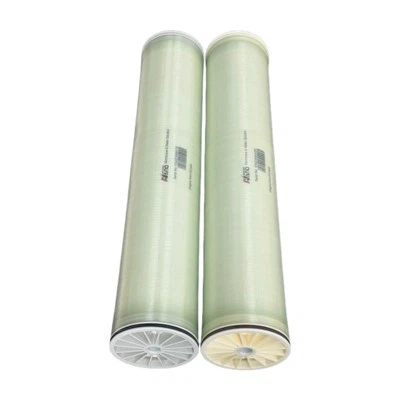
Let’s talk about real-world failure modes, because that’s where mechanical strength shows its weaknesses. The three most common failures we see that are related to mechanical strength: delamination, tears, and compaction. Delamination is when the layers of the membrane separate—usually the polyamide top layer peels off the polysulfone middle layer. That happens if the bond between the layers is weak, which is a manufacturing defect. We use a proprietary bonding process that’s tested to not delaminate even at 1,500 PSI for 100 hours, so we almost never see that issue. Tears happen when the membrane rubs against the housing, or a sharp particle in the water punctures it. That’s why tensile strength and the backing material matter so much—our membranes can’t be punctured by the small sediment that gets through pre-filters. Compaction is when the membrane gets squashed under pressure, and the pores close up. That’s a big one for high pressure systems—if the membrane compacts, water flow drops, and you have to increase pressure to get the same output, which leads to even more compaction. Our membranes have a compaction rate of less than 5% at 1,000 PSI, vs. 15 to 20% for budget membranes. So they keep flowing, and you save energy too. I always tell customers: a membrane that doesn’t compact is a membrane that works harder for you, not against you.
Now, let’s get specific about how we test our membranes, because anyone can throw numbers around, but testing is where the truth is. We don’t just do lab tests in a climate-controlled room—we do field tests too, alongside our lab tests. Every new membrane formula we develop gets tested in a working desal plant for 6 months, under real operating conditions, not just the ideal ones. Last year, we tested a new high strength backing in a desal plant in Oman, where the operating pressure was 1,400 PSI (higher than standard SWRO) because the source water was extra salty. The old membranes they were using would fail after 18 months, but our test membranes are still going strong after 28 months, with no loss in strength or performance. That’s the kind of data you can’t get from a lab test alone.
Wait, I know some of you are thinking: “My system isn’t seawater RO, it’s something else—does this apply?” Let’s cover other applications. For high pressure nanofiltration (NF) used in industrial processing, operating pressures are around 400 to 800 PSI. Our NF membranes have a burst strength of 1,200 PSI, which is more than enough. For ultrafiltration (UF) used for water pretreatment, operating pressures are lower, around 100 to 300 PSI, but if you’re backwashing at high pressure (which a lot of plants do to save water), you still need good tensile strength to handle that backwash pressure. Our UF membranes test at 1,500 PSI burst strength, so they handle backwash surges no problem. No matter what high pressure application you’re in, mechanical strength is non-negotiable.
Let’s wrap this up with the bottom line, because that’s what everyone cares about. When you’re choosing a high pressure membrane, don’t just look at the price, or the salt rejection rate, or the flow rate. Dig into the mechanical strength: what’s the burst strength? What’s the wet tensile strength? What safety factor does the manufacturer build in? How do they test their membranes? A membrane that’s “good enough” for the pressure isn’t enough—you need one that’s built to handle spikes, fouling, chemical cleaning, and the wear and tear of years of operation.
At our shop, that’s exactly what we deliver. We don’t cut corners on materials, we test every roll, and we build our membranes to last, not just to pass a quick lab test. If you’re dealing with membrane failures, high replacement costs, or just tired of buying cheap membranes that let you down, we can help. We’ll walk you through your system, test what kind of pressure you’re dealing with, and match you with the right high pressure membrane for your needs, no sales pitch, just real advice.
If you’re ready to stop dealing with membrane issues and start getting a reliable, long-lasting solution, reach out. We can send you samples for testing, or help you upgrade your current system. Don’t let flimsy membranes cost you time and money—invest in a membrane with the mechanical strength you actually need.
System Center References
- Baker, R. W. Membrane Technology and Applications, 3rd ed. Wiley, 2012.
- Li, N. N., Fane, A. G., Ho, W. S. W., & Matsuura, T. Advanced Membrane Technology and Applications. Wiley, 2008.
- State-of-the-Art Reverse Osmosis Membranes: Mechanical Strength and Long-Term Performance. Journal of Membrane Science, vol. 567, 2018, pp. 124–132.
- Tensile and Burst Strength Characterization of Thin-Film Composite Membranes for High-Pressure Applications. Desalination, vol. 435, 2018, pp. 1–7.
Hangzhou Nanoimp Environmental Technology Co., Ltd.
With abundant experience, we are one of the most professional high pressure membrane manufacturers and suppliers in China. Welcome to wholesale high quality high pressure membrane in stock here and get pricelist from our factory. We also accept customized orders.
Address: Road 25, Baiyang Street, Qiantang District, Hangzhou City, Zhejiang Province
E-mail: keith.wang@nano-sepmer.com
WebSite: https://www.nanoimp-membrane.com/
