Hey there, I’m Jake, and I’ve spent the last 12 years of my life working with right angle bevel gear reduction motors—first as an engineer troubleshooting manufacturing line motors, and for the last 7 years, as a supplier of these exact units to factories, automation integrators, and small business owners who need reliable, space-saving power. If you’ve landed here because you’re shopping for these motors and wondering, “Wait, what electromagnetic compatibility (EMC) rules do I actually have to follow?” you’re in the right spot. I’ve fielded this question at least a dozen times a month, and most of the time, the answer isn’t as black and white as people think. It depends on where your motor’s going, what it’s powering, and how it’s installed—stuff I’ve learned through fixing my own mistakes (like a shipment last year that got rejected because we missed a minor EMC mark for European markets) and listening to clients’ horror stories of equipment halts from EMI. Let’s break this down without all the stuffy engineer jargon that makes your eyes glaze over. Right Angle Bevel Gear Reduction Motor

First, let’s start with the basics: what even is EMC for a right angle bevel gear reduction motor? Unlike a standard inline motor, our right angle models have that built-in gearbox that shifts power 90 degrees—and that gearbox is a tiny, closed metal unit that can act like a little antenna. Couple that with the variable frequency drives (VFDs) most people use to run these motors (to tune speed and torque), and you’ve got two potential sources of electromagnetic interference (EMI) that can mess with nearby electronics. EMI isn’t just a nuisance, either. I once had a client in a bottling plant whose right angle bevel motors were triggering the plant’s RFID tracking system, making it impossible to keep tabs on empty bottles as they moved down the line. Another client’s hospital supply cart motors were causing nearby patient monitors to flicker—thankfully we caught that before anyone had a bad reaction. EMC is just making sure your motor doesn’t emit too much unwanted electromagnetic energy, and that it’s immune to the energy everyone else is emitting around it, whether that’s Wi-Fi, other motors, or hospital equipment.
Now, the big part: EMC requirements aren’t global—they’re regional, and if you sell or install a motor across borders, you have to match the rules of the location it’s operating in. Let’s run through the two biggest markets our clients deal with, because that’s where most of the confusion happens.
First, the European Union, which follows the EMC Directive (2014/30/EU). If you’re selling a motor to someone in Germany, France, Poland, or any EU country, this is non-negotiable—no EMC mark, no sale. What does this require specifically for our right angle bevel gear reduction motors? Two core things: emission limits and immunity limits. Emission limits mean the motor can’t radiate or conduct more EMI than the EU’s standards allow. For our motors, that’s tested both when the motor is running at full load and at no load, because EMI spikes differently when the gearbox is under pressure. For immunity, the motor has to withstand external EMI without breaking down. That might mean it works next to a 5G router, another industrial motor, or even a heavy-duty welding machine—stuff that could throw off a less robust gear motor.
Last year, we had a client in Spain who didn’t realize their new packaging line needed a harmonized EMC test report for the EU. They bought a cheap off-brand right angle bevel motor from a foreign supplier that didn’t have the CE marking for EMC, and their entire line got held up at customs. We stepped in, replaced the motor with our model that had full EMC testing, and got it through in 48 hours—never again will that client skip checking EMC for EU shipments.
Next, the United States and Canada, which follow FCC Part 15 (for residential, commercial, and light industrial use) and ICES-001 (for Canada, basically the same as FCC). The key difference here is that EMC requirements are enforced more by the end user than by customs, mostly because there’s no single “EMC mark” like CE. But that doesn’t mean they’re less strict. If your motor is powering a smart device, a medical tool, or any equipment that needs to pass FCC testing, your right angle bevel gear motor has to meet these limits too. We once had a client in Boston building small electric lawn tractors—their OEM electronics failed FCC Part 15 when paired with a cheap motor, because the gearbox was radiating too much high-frequency noise. We swapped in our EMC-compliant motors, and they passed on the first try.
Now, what if you’re installing your motor in a more niche location? Think about a factory that has sensitive lab equipment, a mining site with radio communication systems, or a coastal area where there’s lots of electrical storm activity. For those, EMC requirements get a lot more specific. In industrial settings, a lot of places reference IEC 61800-3, which is the global standard for adjustable speed power drive systems—our right angle bevel gear motors paired with VFDs fall right into this. That standard splits industrial environments into three categories: residential, light industrial, and heavy industrial. Heavy industrial, like a steel mill with huge welders, has way stricter immunity requirements than a small bakery, because you’ve got way more EMI bouncing around. We recently modified a batch of motors for a mining client in Nevada by adding shielded power cables and a ferrite core to the motor’s input—cost us a bit more, but the client didn’t have to deal with their comms cutting out in tunnels, which was worth every penny.
Wait, but what about things you can control on our end, as a supplier, and what you’ll have to figure out on yours? Let’s get practical. As someone who’s built these motors for 12 years, here’s what we do to meet EMC requirements, and what you should ask for when buying. First, every right angle bevel gear motor we sell has a fully enclosed metallic gearbox—plastic gearboxes might be lighter, but they let more EMI escape, so we only use cast iron or aluminum for industrial applications. Second, we add integrated ferrite cores on the power leads, which soak up high-frequency noise before it can be emitted. Third, all our motors are tested for both conducted EMI (noise traveling through power cables) and radiated EMI (noise bouncing through the air), because both can cause problems.
But here’s the part most suppliers won’t tell you: EMC isn’t just about the motor itself—it’s about how you install it. I once had a client in Detroit who installed our motors with unshielded power cables running right next to their factory’s Wi-Fi router. The motor’s EMI didn’t meet limits on paper, because the unshielded cable was acting as an antenna. We talked him through rerouting the cables, adding shielded conduit, and grounding the motor frame properly, and the problem was gone. A lot of new installers forget that grounding is the single cheapest and most effective EMC fix there is—if your motor isn’t properly grounded, all that EMI has nowhere to go, and it’ll bounce back into your control system.
Another common misconception: small motors don’t need EMC. I hear this all the time from clients who are building small automated kiosks or tool holders. Last year, a client building interactive museum kiosks tried a tiny $50 right angle bevel gear motor that wasn’t EMC-compliant, and every kiosk would crash when the motor ran. It turned out the EMI was interfering with the kiosk’s touchscreen controller—something that would have never happened with a motor built to meet FCC Part 15. That $50 motor saved them $5 upfront, but cost them thousands in repair fees and lost museum contracts. EMC is a “pay now or pay later” kind of thing, period.
Now, what about when standards change? It’s not like EMC requirements are set in stone. The EU updates its EMC Directive every few years, and the IEC revises their standards for drive systems to account for new tech like VFDs that run at higher frequencies. A few years back, we had to retool our entire motor production line to meet the new IEC 61800-3:2019 update, which tightened limits on high-frequency EMI from motors. It was a big investment, but we didn’t want our clients getting stuck with obsolete motors that wouldn’t pass new testing. So when you’re buying a right angle bevel gear reduction motor, don’t just ask if it meets “current standards”—ask when it was tested, and if it will meet any upcoming updates for your region. If you’re a small business, a reputable supplier should keep you in the loop on that—we send all our clients a yearly update on EMC changes that might affect their equipment, because we don’t want to leave them hanging.
Let’s wrap this up with a couple of quick do’s and don’ts, because I know you’re here for actionable info. Do: ask for a full EMC test report from your supplier, not just a CE or FCC label. Labels mean nothing if there’s no proof the motor passed testing specific to right angle bevel gear motors—our gearboxes are unique, so their EMI profile is different from inline motors. Don’t: buy the cheapest motor you can find. EMC testing adds cost, and suppliers who skip that to undercut you will lead to headaches down the line. Do: plan for installation during the motor buying process. If you know you’re putting it next to sensitive equipment, ask your supplier about optional shielded cables, ferrite cores, or grounding kits. We add those as standard options on all our motors now, because most clients don’t think about that until they’re already dealing with a problem.
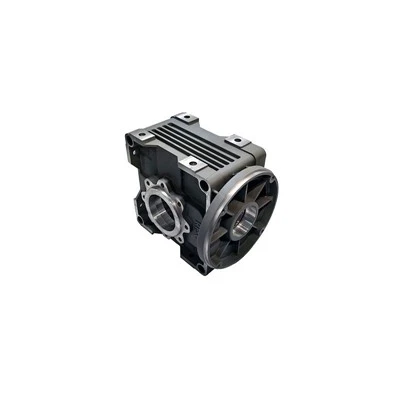
At the end of the day, as a supplier, my job isn’t just to sell you a right angle bevel gear reduction motor that spins on schedule. It’s to make sure that motor works with the rest of your equipment, no interference, no shutdowns, no customs delays. I’ve seen too many clients waste time and money because they skipped the EMC part of the process, and I’m here to make sure that doesn’t happen to you. Whether you’re a small business owner putting together a new packaging line, an automation engineer building a medical device, or a factory manager replacing old motors, we can walk through your specific setup, figure out exactly what EMC requirements apply to your project, and find a motor that fits both your power needs and your compliance rules. If you’ve got questions, or you’re ready to put together a project quote, don’t hesitate to reach out and connect. We’re here to help you get it right the first time, no headaches.
Helical Gear Motors References:
- IEC 61800-3:2019, Adjustable speed electrical power drive systems – Part 3: EMC requirements and specific test methods
- EU Directive 2014/30/EU, Electromagnetic Compatibility (EMC)
- FCC Part 15, Radio Frequency Devices
- International Electrotechnical Commission (IEC) General Requirements for EMC Testing of Rotating Electrical Machines
GuangDong Ruisico Transmission Technology Co., Ltd.
Guangdong Ruisico Transmission Technology Co., Ltd. is one of the most reliable right angle bevel gear reduction motor manufacturers and suppliers in China, also supports customized service. Welcome to buy durable right angle bevel gear reduction motor made in China here and get quotation from our factory. For price consultation, contact us.
Address: No. 70, Anjing Road, Shengfeng Community, Xiaolan Town, Zhongshan City
E-mail: info@risc-drive.com
WebSite: https://www.risc-motor.com/
