Hey there, if you’ve ever messed around with pneumatic systems, you know how annoying it is when a fitting throws a wrench in the works—mid-shift, no warning, and half your assembly line’s down before you can grab a wrench. I’ve been in this game for 12 years now, selling pneumatic fittings to everything from auto shops to food processing plants, and let me tell you: most “sudden failures” aren’t actually random. They’re just the fitting’s way of screaming for help that no one heard. Today I’m breaking down the most common fails I see, straight from the trenches—no fancy engineering jargon, just real stuff that trips up even the most seasoned techs. Pneumatic Fitting
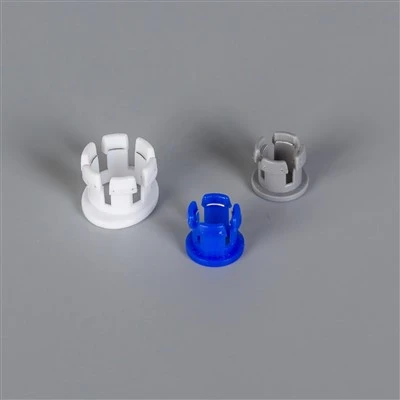
First off, let’s get one thing straight: pneumatic fittings aren’t just random metal (or plastic) bits you screw together. They’re the backbone of your whole system—what keeps air pressure consistent, stops leaks, and connects hoses, valves, cylinders, all that good stuff. A bad fitting isn’t just a tiny problem; it can cost you thousands in downtime, scrap parts, even safety issues if it’s on a high-pressure line. I’ve had a customer once lose $15k in an hour because a cracked fitting on a packaging line let all the pressure bleed out mid-box-seal—they were using cheap off-brand fittings from a random warehouse, and that’s exactly the kind of mistake we’re talking about here.
Okay, the first big one that shows up way more than it should: improper installation. Look, I get it—everyone’s in a rush. But I’ve seen techs yank a hose onto a push-to-connect fitting with pliers, or just hand-tighten a threaded fitting and call it a day. Let’s break that down. Push-to-connect fittings (super common, since they’re fast) have this O-ring and a collet—those little teeth that bite into the hose. If you just shove the hose on haphazardly, the collet might not seat right, or the O-ring might get nicked when the hose edge scrapes it. I had a newbie customer last month install a whole order of push-to-connects in 10 minutes flat, no extra check—2 hours later, they had air leaking out of every single line because the collet never locked. The fix? You gotta pull the hose back a tiny bit after pushing it on, then tug it firmly—if it doesn’t move, it’s in. Threaded fittings are another beast: you need to use Teflon tape correctly, not wrap it the wrong way so it bunches up in the threads. If you wrap tape clockwise (the direction you tighten), it’ll bunch up and clog the fitting, or even jam it so you can’t take it apart later. I’ve seen guys tear a whole new thread trying to yank a bad threaded fitting because they skipped the tape wrap direction.
Next up: material mismatch. This is such a silent killer, because no one stops to check what their fitting is made of vs. their hose, their operating conditions. Let’s say you’ve got a super tough nylon hose, but you pair it with a cheap zinc-plated steel fitting for a low-stress line. Wait—zinc is soft, nylon is rigid. Over time, the nylon hose flexes and rubs against the fitting’s edge, and eventually wears a groove in the hose where it seats. Even worse: if you’re working with harsh stuff, like humid air, or even oils that sneak into the pneumatic line, some plastics (like regular nylon) will break down. I had a food processing customer last year who used standard plastic fittings on a line that ran through a steam room—steam is hot, so the plastic softened, and the fittings deformed under pressure. They swapped to high-temperature PPS fittings, no more issues. And don’t get me started on dissimilar metals. If you pair a brass fitting with a steel hose barb, for example, the two metals can corrode together because of electrolysis (it’s like when a battery works, but bad). Then you can’t take the fitting apart—you have to cut the hose, sometimes damage the whole line, just to fix it. That’s a avoidable fail right there, people.
Third common fail: pressure and temperature overload. Most pneumatic fittings have a max working pressure and max temp stamped right on them, but so many people ignore that. I see it all the time: a tech uses a 150 PSI rated fitting on a line that runs at 180 PSI “just to be safe” (news flash, that’s not safe). Or they leave a line outside in the middle of summer—85°F ambient temp, and the line’s running at 120°F, which pushes the fitting way over its max. Over time, that constant stress (pressure cycles, temp swings) causes the fitting to fatigue. Think of it like bending a paper clip back and forth: at first it’s fine, but after 10, 20, 1000 bends, it snaps. Same with fittings. I had a construction customer last winter who used the same type of fittings for their hydraulic-assisted nail guns as they did for their air compressors. Nail guns spike pressure way higher when they fire, so after a few weeks, the fittings started cracking. We swapped them to industrial-grade high-pressure fittings, and they haven’t had a single break since. Also, don’t forget vacuum lines—most standard fittings aren’t rated for negative pressure, so they’ll pull apart or leak even if they work fine for regular compressed air.
Fourth up: improper sizing. This is another one that’s easy to mess up if you’re guessing. I can’t tell you how many times someone orders a fitting that’s just a little too big or a little too small. Let’s say you have a 10mm hose, but you get a 12mm push-to-connect fitting. The hose won’t seal, so air leaks out. If the fitting’s too small, you have to stretch the hose to get it on, which weakens the hose walls over time—they’ll split right at the fitting, usually when you’re mid-cycle. Threaded fittings are even trickier: NPT vs. BSP threads? If you mix those up, they’ll never seal right, no matter how much Teflon tape you use. NPT is tapered, BSP is parallel, and they don’t match up. I had a guy order 50 threaded fittings for his warehouse racking air system, all NPT, when his hoses used BSP threads. He wasted a whole week trying to get them to seal, until I pointed out the thread difference. Sizing also applies to flow, by the way. If you use a tiny fitting on a high-flow line, it creates a pressure drop, which makes your whole system work harder, uses more air, and wears out valves or cylinders faster. That’s a hidden cost most people don’t account for.
Fifth: corrosion and wear from the environment. If your system is outside, or in a dusty plant, or even in a medical setting with sterile cleaning chemicals, fittings take a beating. Salt air (like coastal factories) eats away at cheap zinc-plated fittings—they’ll rust through in months, not years. Dust and debris can get into the threads of threaded fittings, so when you go to tighten them, you’re grinding debris into the seal, which creates leaks. I had a mining customer whose mine site was super dusty, and they were using uncoated steel fittings on their drilling lines. After 3 months, the threads were full of rock dust, so every time they changed a line, the fitting wouldn’t seal, and they had to replace half the fittings just to get the line back up. We switched them to coated stainless steel fittings, and that fixed the dust problem entirely. Even indoors, if you use fittings in a food plant where they use harsh bleach or ammonia-based cleaners, cheap plastic fittings will degrade. You need ones rated for that kind of chemical exposure, not just any plastic.
Wait, and let’s not forget about old or worn fittings. Some guys just wait until a fitting leaks to replace it, but fittings have a lifespan. Push-to-connect collets get worn out after a few hundred disconnects—those little teeth that bite the hose get dull, so they don’t hold tight anymore. O-rings dry out, crack, or get twisted in their groove, even if you didn’t mess up installation. I see so many people reusing fittings they took off old lines, only to have them fail right away. Fittings aren’t meant to be reused over and over like that—each time you disconnect a push-to-connect, you risk scratching the collet or the O-ring. Threaded fittings can be reused a couple times, but only if you check the threads for wear first. I always tell customers: if you’re taking a fitting apart, replace it with a new one if it’s going back on a high-pressure line. It’s way cheaper than a downtime emergency.
Now, a lot of these fails sound like common sense, right? But you’d be surprised how many people skip the basics, especially when they’re in a pinch. The good news is most of these are totally avoidable with a little prep: double-checking installation, matching materials, checking ratings, sizing correctly, and not skimping on cheap fittings. I know it’s tempting to go for the $0.50 off-brand fitting, but a $50 fitting that lasts 2 years is way better than a $0.10 one that breaks every 2 months and costs you $10k in downtime.

If you’re dealing with a fitting that keeps failing, or you’re planning a new pneumatic system and want to make sure you don’t pick the wrong parts, hit me up. I’ve worked with all kinds of systems, from small workshop setups to big industrial lines, and I can help you pick the right fittings for your needs. No pressure, no sales pitch—just 12 years of experience trying to keep your system running smooth.
Water Fittings References:
- Pneumatic Fitting Selection and Installation Guide, National Fluid Power Association
- “Common Failure Modes of Compressed Air System Components”, International Journal of Fluid Power, 2019
- Material Compatibility for Pneumatic Applications, Society of Plastics Engineers, 2021
- “Downtime Cost Analysis for Industrial Pneumatic Systems”, Manufacturing Engineering Society International, 2020
Yuyao Eshiong Pipe Fittings Technologies Co., Ltd.
Yuyao Eshiong Pipe Fittings Technologies Co., Ltd. is one of the most professional pneumatic fitting manufacturers and suppliers in China. With abundant experience, we warmly welcome you to wholesale bulk customized pneumatic fitting at competitive price from our factory. If you have any enquiry about free sample, please feel free to email us.
Address: No.263,North Yangshan Village, Lishan, Ditang Subdistrict, Yuyao ,Ningbo ,Zhejiang
E-mail: sales@trosung.com
WebSite: https://www.eshiongcn.com/
