Hey there, if you’re here, you’re probably deep in the weeds with site shuttle cars—whether you’re an operations manager trying to nail down costs, a fleet tech troubleshooting range issues, or maybe even someone new to the game who’s staring at a battery spec sheet and going, “Wait, what does ‘nominal capacity’ actually mean for these things? Not just some random number, right?” Full transparency: I’ve been deep in the site shuttle car battery game for over 12 years now, so when a customer asks me this exact question at 2 a.m. over Slack because their fleet’s range tanked after a shift, I get it. Nominal capacity isn’t just a line item on a spec sheet—it’s the backbone of how your shuttle cars run, and if you get it wrong, you’re looking at dead haul routes, missed deadlines, and a lot of frustrated team members. Site Shuttle Car Battery

First off, let’s kill the myth that “nominal capacity” is just the max charge a battery can hold. Nah, that’s a common mix-up, and it’s why so many site managers end up with undersized batteries. For site shuttle cars—those rough-and-tumble workhorses moving materials around mines, construction sites, or even big distribution yards—nominal capacity is the official, rated amount of energy a battery is designed to deliver under specific, real-world site conditions. It’s not the ideal lab number you see on consumer phone chargers; it’s tailored for the chaos of a worksite: uneven terrain, constant stop-and-go, extreme temperatures, and deep discharge cycles that would make a consumer battery cry. Most site shuttle cars run on lead-acid (flooded or absorbed glass mat, AGM) or lithium-ion batteries these days, and their nominal capacity is measured in amp-hours (Ah) at a specific “C-rate” — that’s just a fancy way of saying how fast you’re draining the battery. For shuttle cars, that’s usually a 8-hour discharge rate, because that’s roughly how long a full shift of continuous hauling runs before someone plugs it in to charge.
Let’s break it down with a real example, not some textbook stuff. Last month, I got a call from a mine foreman in West Virginia who was furious. He’d just replaced his old shuttle car’s lead-acid battery with one that had a “1,000 Ah” nominal spec, but it died halfway through a 6-hour shift, whereas his old 950 Ah battery ran the whole shift. Turns out, the new battery was rated at a 2-hour C-rate—meaning the manufacturer was telling you it could deliver 1,000 Ah if you drained it over 2 hours. But his mine’s shuttle car only uses about 150 amps an hour under normal hauling, so over 6 hours, that’s only 900 Ah of actual usable energy. He got stung because he didn’t ask: “Wait, what C-rate is that nominal capacity rated at?” That’s the key question no one thinks to ask. For site shuttle cars, always get that 8-hour C-rate number— that’s the one that matches how your fleet actually operates.
Now, why does nominal capacity matter more than the “max” capacity manufacturers brag about? Site conditions are brutal. Temperatures in underground mines can swing from freezing in the entryways to sweltering near the ore face—extreme heat or cold kills battery performance fast. A lithium-ion battery rated at 500 Ah at 70°F might drop to 400 Ah if it’s 20°F outside, or 350 Ah if it’s 100°F. Nominal capacity is adjusted for that real-world performance, so it’s not some pie-in-the-sky number. Another big one: shuttle cars don’t drive like your car—they’re hauling 10-20 tons of material, constantly accelerating and braking, and stopping every few feet to load or unload. That means they draw a lot of power in short bursts, and nominal capacity accounts for that surge demand, not just steady drain. If a battery’s nominal capacity is too low, you’ll get “voltage sag” mid-shift—where the battery can’t keep up with the power demand, the shuttle car slows down, and you’ve got a line of trucks waiting to be unloaded, killing productivity.
I’ve seen way too many site managers cut corners on nominal capacity to save a few bucks upfront. They’ll buy a battery with a lower nominal spec, thinking “it’s just a shuttle car, it’ll work.” But in 6 months, they’re replacing batteries every 18 months instead of 3, because they’re being run too hard, deep-cycled daily, and dying early. Last year, a construction site in Texas did that—they went with a 2,000 Ah nominal lithium-ion battery instead of the 2,500 Ah I recommended, because it was $1,200 cheaper. By month 10, they were having to charge the battery twice a shift, and it only had 70% of its original capacity left. Turned out, their shuttle car was hauling heavy concrete mixes over unpaved, hilly terrain, so it was drawing 20% more power than a flat site would. The lower nominal capacity couldn’t handle the extra load, and the battery wore out way faster.
Now, let’s talk about how to calculate the right nominal capacity for your specific fleet—this is the actionable stuff, not just theory. First, figure out your average power draw. Grab a data logger (most modern shuttle cars have these, or you can rig a cheap ammeter) and track how many amps your shuttle car uses over an average shift. Let’s say that number is 180 amps per hour. Multiply that by your shift length—let’s say 8 hours—so that’s 1,440 amp-hours. But wait, you never want to run a battery all the way down to 0%—that’s another big killer of battery life. For lead-acid, you shouldn’t go below 50% depth of discharge (DoD), and for lithium-ion, it’s usually 80% DoD. So if your average is 1,440 Ah, divide that by your max safe DoD. For lithium-ion, that’s 1,440 / 0.8 = 1,800 Ah nominal. For lead-acid, that’s 1,440 / 0.5 = 2,880 Ah. That way, you’ve got a buffer—your battery runs through the shift, and you plug it in before it gets damaged, plus you have extra capacity for those peak power moments when you’re hauling a full load up a steep ramp.
Wait, but don’t just take that number and run—factor in site-specific variables. If your site is in a cold climate, add 10-15% to that nominal capacity, because batteries lose performance in the cold. If you’re hauling heavier loads (like 20+ tons instead of 12), add another 10%. If your shifts are longer than 8 hours, you might need a higher nominal battery, or an extra one for swaps. And don’t forget the C-rate we talked about earlier—make sure the nominal capacity is rated at the 8-hour discharge rate, not a 2 or 4-hour rate, which will make the number look higher than it actually is for your use case.
A lot of people also mix up nominal capacity with “usable capacity.” Usable is how much power you can actually take out before recharging, and nominal is the rated design capacity. That gap is where the confusion happens, especially when manufacturers fudge numbers to make their batteries look better. At my shop, we always tell customers to ask for two numbers: nominal capacity at the 8-hour C-rate, and max safe DoD. That way, you’re not getting tricked into buying a battery that looks like it has more capacity than it actually does for your site.
I get it, cost is a big factor—batteries are a huge expense for shuttle car fleets. But here’s the thing: buying a battery with the correct nominal capacity isn’t a luxury, it’s an investment. A battery that’s sized right will last 3-5 years, whereas an undersized one might only last 18 months, and you’ll be dealing with downtime, missed deadlines, and extra replacement costs. I had a customer in Kentucky last year who switched from undersized lead-acid batteries to correctly sized lithium-ion ones with the right nominal capacity, and he told me his battery-related downtime dropped by 70% in the first quarter. That’s not a stat from a sales pitch—that’s real site data.
Another thing to consider: battery type affects nominal capacity too. Lithium-ion batteries have a higher energy density, so you can get a higher nominal capacity in a smaller, lighter package, which is great for shuttle cars where weight matters (too much extra weight means you can haul less material). Lead-acid batteries are heavier, so you might need a higher nominal capacity, but they’re cheaper upfront for smaller fleets. Either way, the nominal capacity rule still applies—get that 8-hour C-rate number, match it to your site’s power needs, and don’t cut corners.
Let’s wrap this up with a quick reality check. I’ve been in this game long enough to know that when you’re on a worksite, you don’t have time to pore over 10-page spec sheets. But understanding nominal capacity isn’t about being a battery expert—it’s about asking the right questions. When you’re shopping for a site shuttle car battery, don’t just say “give me a 2,000 Ah battery.” Say, “I need a nominal capacity of X Ah rated at the 8-hour discharge rate, adjusted for my site’s temperature, load weight, and shift length.” That’s how you avoid the mistakes that cost you time and money.
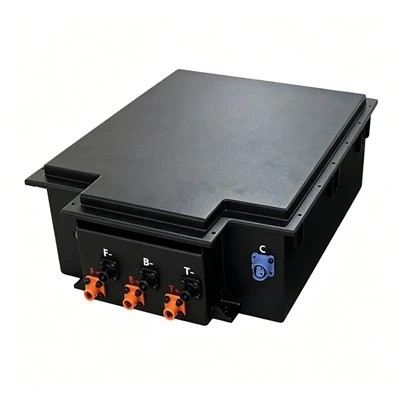
If you’re in the market for new batteries, or you’re confused about whether your current ones are sized right, hit me up. We don’t do one-size-fits-all here—we’ll help you calculate exactly what nominal capacity your fleet needs, no sales pitch, no hidden fees, just straight-up advice from someone who’s been working with site shuttle cars and their batteries for over a decade. Let’s make sure your shuttle cars run at full capacity, not dead halfway through a shift.
Home Storage Battery References
- IEEE 1484-2020, Standard for Battery Capacity and Performance Testing for Heavy-Duty Industrial Vehicles
- Mining Safety and Health Administration (MSHA), “Battery Storage and Performance Guidelines for Underground Mining Equipment”, 2022
- International Society of Automotive Engineers (SAE), “Nominal Capacity Definitions for Electric Commercial Vehicle Batteries”, J2281, 2021
- Battery University, “Understanding Battery Capacity, C-Rate, and Depth of Discharge”, 2023
Zhuhai Greaton Electronic Technology Co., Ltd.
As one of the most professional site shuttle car battery manufacturers and suppliers in China, we have world-leading production equipment and strong manufacturing capabilities. Please rest assured to wholesale advanced site shuttle car battery in stock here from our factory. Customized orders are welcome.
Address: 2nd Floor, Building A3, No. 6, Liulu, Xinqing Science and Technology Industrial Park, Jing’an Town, Doumen District, Zhuhai City
E-mail: wangchen1@psbattery.cn
WebSite: https://www.cngreaton.com/
