In the dynamic landscape of manufacturing, welding robots have emerged as a cornerstone technology, revolutionizing the way we approach metal fabrication. As a leading supplier of welding robots, I’ve witnessed firsthand the remarkable advancements that have propelled these machines to new heights of efficiency, precision, and versatility. In this blog post, I’ll delve into the latest technological breakthroughs in welding robots, exploring how they are shaping the future of the industry. Welding Robot
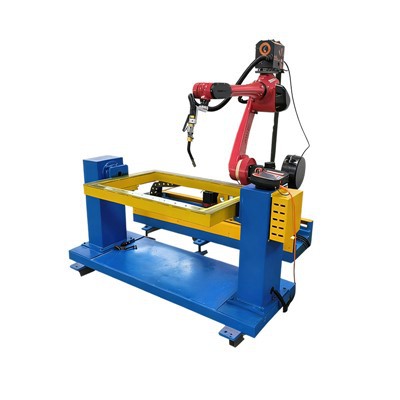
1. Enhanced Vision Systems
One of the most significant advancements in welding robots is the development of sophisticated vision systems. These systems use cameras and sensors to provide real-time feedback on the welding process, allowing the robot to adjust its parameters based on the actual conditions of the workpiece. This not only improves the quality of the weld but also reduces the need for manual intervention, leading to increased productivity and cost savings.
Modern vision systems can detect a wide range of features, including the position, orientation, and shape of the workpiece, as well as the presence of defects such as cracks and porosity. By analyzing this data, the robot can make precise adjustments to the welding path, speed, and power, ensuring a consistent and high-quality weld. Some vision systems even have the ability to recognize different types of materials and adjust the welding parameters accordingly, further enhancing the flexibility and adaptability of the robot.
2. Artificial Intelligence and Machine Learning
Artificial intelligence (AI) and machine learning (ML) are transforming the capabilities of welding robots. These technologies enable the robot to learn from past experiences and optimize its performance over time. By analyzing large amounts of data collected during the welding process, AI algorithms can identify patterns and trends, allowing the robot to make more informed decisions and improve its efficiency.
For example, AI-powered welding robots can predict the quality of the weld based on the input parameters and adjust the welding process in real-time to ensure a high-quality result. They can also detect and diagnose potential problems before they occur, reducing downtime and improving the overall reliability of the system. In addition, machine learning algorithms can be used to optimize the welding path, reducing the amount of time and energy required to complete the weld.
3. Collaborative Robots
Collaborative robots, also known as cobots, are a new breed of welding robots that are designed to work alongside human operators. These robots are equipped with sensors and safety features that allow them to interact with humans in a safe and efficient manner. Cobots can perform a variety of tasks, including welding, grinding, and assembly, and can be easily programmed to adapt to different production requirements.
One of the key advantages of cobots is their flexibility. They can be quickly reconfigured to perform different tasks, making them ideal for small batch production and custom manufacturing. In addition, cobots can work in close proximity to human operators, allowing for greater collaboration and efficiency. This not only improves the quality of the work but also reduces the risk of injuries and accidents.
4. Advanced Welding Processes
The development of advanced welding processes is another area where significant progress has been made in recent years. These processes, such as laser welding, friction stir welding, and plasma arc welding, offer a number of advantages over traditional welding methods, including higher precision, faster welding speeds, and better quality welds.
Laser welding, for example, uses a high-powered laser beam to melt and fuse the metal, resulting in a precise and clean weld. This process is particularly well-suited for applications where high precision and quality are required, such as in the automotive and aerospace industries. Friction stir welding, on the other hand, uses a rotating tool to generate heat and plasticize the metal, resulting in a strong and defect-free weld. This process is commonly used in the manufacturing of aluminum and other lightweight materials.
5. Cloud Connectivity and Remote Monitoring
Cloud connectivity and remote monitoring are becoming increasingly important in the world of welding robots. By connecting the robot to the cloud, manufacturers can access real-time data on the performance of the robot, including welding parameters, quality metrics, and maintenance information. This allows them to monitor the robot’s operation from anywhere in the world and make informed decisions about its use and maintenance.
Remote monitoring also enables manufacturers to detect and diagnose problems before they occur, reducing downtime and improving the overall reliability of the system. In addition, cloud connectivity allows for the sharing of data and best practices between different manufacturing facilities, leading to increased efficiency and innovation.
6. Integration with Other Technologies
Welding robots are increasingly being integrated with other technologies, such as 3D printing, robotics, and automation. This integration allows for the creation of more complex and sophisticated manufacturing systems, capable of producing high-quality products with greater efficiency and precision.
For example, 3D printing can be used to create custom fixtures and tooling for welding robots, allowing for greater flexibility and customization. Robotics can be used to automate the handling and positioning of the workpiece, reducing the need for manual labor and improving the accuracy of the welding process. Automation can be used to control the entire manufacturing process, from raw material handling to finished product inspection, ensuring a consistent and high-quality result.
Conclusion
The latest technological advancements in welding robots are transforming the manufacturing industry, offering greater efficiency, precision, and versatility than ever before. From enhanced vision systems and artificial intelligence to collaborative robots and advanced welding processes, these technologies are enabling manufacturers to produce high-quality products with greater speed and accuracy.
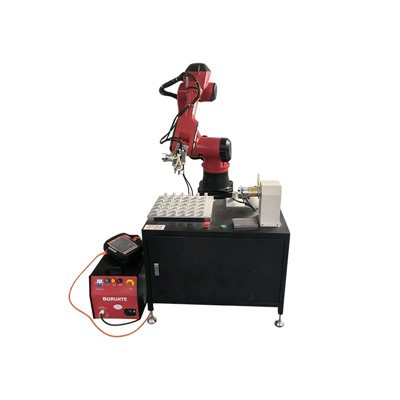
As a supplier of welding robots, I’m excited to be at the forefront of this technological revolution. Our company is committed to providing our customers with the latest and most advanced welding robot solutions, tailored to their specific needs and requirements. Whether you’re a small business looking to automate your welding process or a large manufacturer seeking to improve your productivity and quality, we have the expertise and experience to help you achieve your goals.
Nail Gun Robot If you’re interested in learning more about our welding robot solutions or would like to discuss your specific requirements, please don’t hesitate to contact us. Our team of experts is ready to answer your questions and provide you with a free consultation. Let’s work together to take your manufacturing process to the next level.
References
- American Welding Society. (2023). Welding Handbook, Volume 1: Welding Technology.
- International Federation of Robotics. (2023). World Robotics 2023.
- Robotics Industries Association. (2023). Robotics Trends in Manufacturing.
- Welding Journal. (2023). Latest Research in Welding Technology.
Dongguan Chuanglida Intelligent Equipments Co., Ltd.
As one of the most professional welding robot manufacturers and suppliers in China, we also support customized service. Please feel free to buy discount welding robot in stock here from our factory. For price consultation, contact us.
Address: Room 201, Building 2, No. 61, Shachang 1st Road, Dalang Town, Dongguan City, Guangdong Province
E-mail: haoguangli001@outlook.com
WebSite: https://www.boruntestech.com/
