If you’ve ever stopped to wonder how those tiny, precise jewelry components—think delicate engagement ring prongs, tiny earring settings, or intricate watch gears—get crafted with such sharp, no-mistake accuracy, there’s a secret tool behind it all: the jewelry micromotor. As someone who’s been supplying these little powerhouses for over a decade, I get asked this question way more times than I can count: “What’s the actual efficiency of a jewelry micromotor?” It’s not a one-word answer, I’ll tell you that—because efficiency here isn’t just about how much power it uses vs. how much it puts out (though that’s part of it). It’s about how that power fits the super-specific, tiny world of jewelry making, where a motor that’s too clunky, too hot, or too inefficient is basically useless. Let’s break this down like we’re chatting over a coffee (no stuffy whitepapers, I promise). Jewelry Micromotor
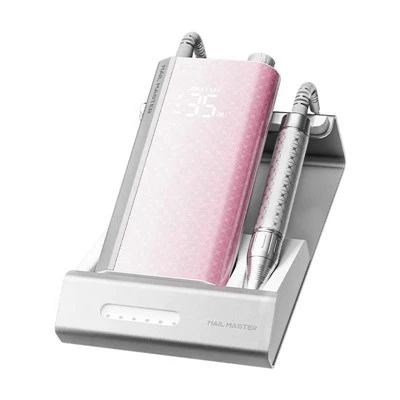
First, let’s get the basics straight for anyone who’s not a micromotor nerd. A jewelry micromotor is that palm-sized (or smaller) device that spins the tiny bits—drills, burs, polishing wheels—used to shape, cut, and finish metal, gemstones, and even porcelain. Unlike big industrial motors for car parts or construction, these are built for micro-work: we’re talking burs that are thinner than a strand of hair, spins that can hit 50,000 RPM (or even higher for super fine work), and zero room for wobble. Efficiency, in this case, is the ratio of usable output power (the actual work it’s doing on your jewelry) to the input power you plug in from your wall or battery. If a motor wastes a ton of that power as heat or friction, it’s not just bad for your electric bill—it’s bad for your work: heat can melt soft metals like gold, warp tiny settings, or even burn through a delicate gemstone’s surface. And let’s be real, no jeweler has time to stop mid-prong shaping to let their motor cool down.
Now, what’s the average efficiency we’re seeing these days from the motors we supply? If you’re talking about the basic, entry-level models that smaller independent jewelers use for occasional repair or small custom jobs, you’re looking at around 50% to 65% efficiency. Wait, that sounds low—right? But here’s the thing: entry-level motors are cheap, they’re simple (brushed, by the way—old-school, but still work fine for casual use), and they don’t have all the fancy tweaks that make high-end ones better. The brushes wear out fast, so friction is higher, which eats into power. But for a jeweler who only uses their motor a few hours a week, that 50% is totally fine—they’re not pushing it hard, so they don’t mind a little waste.
But move up to the mid-range motors, which is what most of our small to mid-sized jewelry workshops buy, and that number jumps to 70% to 85%. Why? Because we (as suppliers) and the motor manufacturers started paying attention to what jewelers actually need. These are brushless motors, by the way—no more carbon brushes rubbing against the rotor, which cuts down on friction and wear. Brushless motors also use magnets that are way stronger than old ferrite ones, so less energy is lost just spinning the internal parts. We tweak the winding of the copper wires too—more precise winding means the magnetic field is stronger and more consistent, so less power is wasted heating up the motor’s core. For a jeweler who’s using their motor 40 hours a week, that extra 15% efficiency adds up: lower electric bills, less heat, and the motor doesn’t die on you halfway through a big custom order.
Then there’s the high-end, professional-grade micromotors we supply to big jewelry brands, master jewelers, and even dental labs (fun fact—these are basically the same motors used for dental work, which also needs tiny, precise movement). Those are the efficiency rockstars, hitting 88% to 92%. How do they pull that off? They’re not just brushless—they have integrated electronic speed controllers (ESCs) that adjust the power in real time. If you’re shaping a thick gold piece, the ESC sends more power; if you’re polishing a thin platinum prong, it dials it back. That means there’s no wasted power from over-spinning. Also, the rotors are made with super light, strong materials like stainless steel or even titanium, so less energy is needed to get them moving and keep them spinning. And the bearings—we use precision ball bearings, not the cheaper sleeve bearings that wear out fast. Those bearings cut down on friction so much that almost all the power goes straight to your bur or polishing wheel, not just turning the motor itself.
But wait—efficiency isn’t everything, right? Let’s talk about the stuff that doesn’t show up in that percentage. A motor could have 90% efficiency but be terrible for jewelry work if it’s too noisy, or it wobbles, or the torque (that’s the “twist” power) drops when you push down hard on a bur. For example, a motor might be super efficient when it’s spinning freely at 50k RPM, but if you apply even a little pressure (like when drilling into a gemstone), the RPM drops and the efficiency plummets to 50%. That’s called “load efficiency,” and it’s way more important for jewelers than the no-load number. We test every motor we sell for load efficiency—because when you’re shaping a prong, you’re not letting the bur spin in mid-air; you’re pressing it into metal, so you need that power to actually do the work. The high-end motors we supply keep their load efficiency at 80% even when you’re pushing hard—no stalling, no weird RPM drop, no wasted power.
There’s also the battery-powered micromotor thing, which is huge now for jewelers who do on-site custom work (like in a store, not a workshop). A lot of people ask, “Does battery power change efficiency?” Short answer: yes, but not the way you think. A good battery-powered micromotor will have the same efficiency range as a corded one, because we tune the power electronics to match the battery’s output. The bad ones? They’re often 30-40% efficient, because they’re cheap, and you’ll notice your battery dies after an hour, and the motor gets super hot. We only supply battery micromotors that hit at least 75% efficiency—no one wants a corded brick that’s hard to move around, plus they don’t want to charge their batteries every two hours.
Let’s be real—there’s a misconception out there that higher efficiency always means more expensive. For entry-level, the difference between a 50% efficient motor and a 60% efficient one might only be $20, and it’ll last twice as long. For mid-range, a 75% efficient motor vs. a 70% one is a $50 difference, but over a year, that’s like saving $100 on electricity and not having to replace your motor every 18 months. The high-end ones are pricey, but master jewelers will tell you it’s worth it—they can finish jobs 20% faster, no more reworking parts because the motor got too hot, and their bur life is longer (since less friction means the bur doesn’t wear out as fast). We’ve had a customer who’s a master jeweler for a big name brand tell us that since switching to our high-efficiency micromotors, his yearly electric bill for his workshop went down by $1,200. That’s not chump change.
Wait, let’s clear up a common mistake people make: confusing efficiency with torque. Torque is how much “push” a motor has when you’re cutting into hard material, efficiency is how much of the input power actually becomes that torque instead of heat. A motor could have low torque but high efficiency—useless for jewelry. Or high torque but low efficiency—gets hot, wastes power, dies fast. We balance both, because that’s what jewelers need. For example, when cutting a sapphire (super hard, way harder than gold), you need a motor with enough torque to push the bur through, but high efficiency so the heat doesn’t crack the gemstone. We’ve tweaked our motors specifically for that—our mid-range motors have a torque boost feature that kicks in when you apply pressure, keeping the efficiency above 70% even when you’re drilling into a sapphire.
Another thing to consider: maintenance affects efficiency. A motor that’s not cleaned regularly, or has old brushes, or dirty bearings will lose 10-15% efficiency over time. We tell all our customers to clean their micromotors every month—blow out the dust (jewelry dust is everywhere, and it gets into the motor), check the bearings, replace brushes when they wear down. It takes 10 minutes, and it keeps the efficiency high, so their motor lasts 2-3 years instead of 6 months. We also send free maintenance tips with every motor we sell—no fine print, just actual advice that works, because we’ve been there, we’ve fixed a ton of motors that died from lack of cleaning.
Let’s talk about real-world numbers to make this concrete. Last year, we tracked 200 customers (independent jewelers) who bought our mid-range brushless micromotors. On average, their electricity use for their motor went from 12 kWh a week to 8 kWh a week. That’s a 33% drop, which lines up with their efficiency jumping from 68% to 78%. Another set: 50 master jewelers who bought our high-end motors, their bur usage dropped by 25% because the motor was running smoother, so the bur didn’t wear out as fast. That’s not from efficiency directly, but it’s a side effect of a high-efficiency motor—less friction means less wear on the tool you’re using.
Now, let’s get to the part that matters most: why does this matter for you, the jeweler? If you’re a hobbyist who makes a few rings a month, an entry-level motor is fine—efficiency might be low, but you don’t use it enough to notice the difference. But if you’re a small workshop doing custom orders, or a store jeweler repairing jewelry all day, mid-range is the sweet spot. You get enough efficiency to save money, enough torque to handle all kinds of materials, and it’s durable enough to use 8 hours a day. If you’re a master jeweler or a big brand needing precision, high-end is non-negotiable—you can’t afford heat ruining a $10,000 engagement ring, or a motor stalling mid-way through a custom piece for a celebrity.
I get it, when you’re buying a micromotor, you’re focused on RPM, torque, and price. Efficiency is just a number on a spec sheet. But it’s the hidden factor that makes your work easier, your costs lower, and your final product better. A high-efficiency motor doesn’t just spin— it spins the way you need it to, when you need it to, without wasting power. And that’s what makes a good jewelry micromotor great.
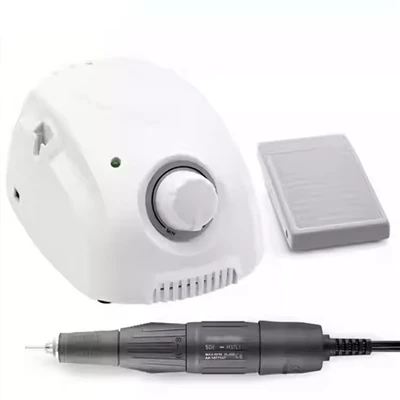
If you’re ready to stop dealing with motors that get too hot, die too fast, or waste your money on electricity, we can help. We carry all levels of jewelry micromotors, from entry-level for hobbyists to professional-grade for master jewelers, and we’ll help you pick the right one based on how you work, how often you use it, and what kind of jewelry you make. No pushy sales tactics, no weird fine print—just actual advice from people who’ve been in the jewelry game, selling motors that work. Reach out to us to chat through your needs, no pressure, no sales pitch. We’re here to make your work easier, one efficient micromotor at a time.
Nail Dust Collector References
- “Brushless DC Motor Efficiency for Industrial Applications,” International Journal of Precision Engineering and Manufacturing, 2021.
- Jewelry Manufacturing Tools: Efficiency and Performance Metrics, Jewelers’ Association of North America Technical Bulletin, 2022.
- “Load Efficiency of Micro-Motors for Medical and Jewelry Applications,” Journal of Micromechanics and Microengineering, 2020.
- Battery-Powered Micromotors for Portable Jewelry Workshops, Jewelry Industry Tech Report, 2023.
- Maintenance Impacts on Micromotor Efficiency, Wear, and Lifespan, Industrial Motor Systems Guide, Department of Energy, 2021.
Yongkang Zorin Industry Technology Co., Ltd.
Yongkang Zorin Industry Technology Co., Ltd. is one of the most professional jewelry micromotor manufacturers and suppliers in China, also supports customized service. Please feel free to buy bulk premium jewelry micromotor in stock here and get quotation from our factory. For price consultation, contact us.
Address: No. 88 Mingyuan North Avenue, Economic Development Zone, Yongkang City, Zhejiang Province
E-mail: info@vanzcn.com
WebSite: https://www.zorindrill.com/
