Hey there, if you’ve ever worked with water treatment, mining, paper manufacturing, or pretty much any industrial process that moves or processes a lot of water, chances are you’ve crossed paths with polyacrylamide emulsion (PAM emulsion). As a supplier of this stuff, I get all kinds of questions: “How does this actually work?” “Why does it behave so different when I use it for sludge dewatering vs. paper retention?” Today, I wanna break down the reaction mechanisms behind PAM emulsion in different systems, from the basic chemistry that makes it tick to why it shifts when you switch industries or use case. No stuffy textbook jargon, just what I’ve learned in the trenches talking to customers every day. Polyacrylamide Emulsion
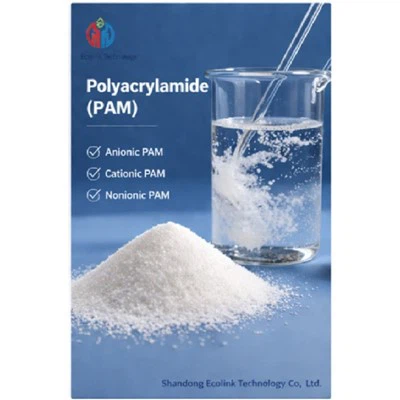
First, let’s start with the basics so we’re all on the same page. PAM emulsion isn’t that scary-sounding lab chemical—well, it is a polymer, but it’s super versatile when formulated right. Most of the PAM emulsion I supply is a water-in-oil (W/O) inverse emulsion, right? So tiny water droplets full of acrylamide monomers and other stuff are suspended in an oil carrier, stabilized with emulsifiers. When you add it to water (which is what happens when you use it), the emulsion breaks apart, and those monomers polymerize (link together) into long, chain-like polymer molecules. That’s the key part: those long chains are where all the magic happens. Now, the reaction mechanism changes a ton depending on what system you’re dumping it into—let’s go through the main ones I deal with as a supplier, one by one.
First up, the one that probably makes up 60% of my orders: water treatment systems, specifically sludge dewatering and primary wastewater clarification. Let’s talk sludge dewatering first, because that’s where I see the most confusion. When you generate wastewater, especially from municipal sewage or industrial plants like food and beverage, you end up with sludge—gunk made of tiny particles, organic matter, bacteria, all that stuff suspended in water. Those particles are usually negatively charged, right? So they repel each other, which is why the sludge stays all soupy and hard to squeeze water out of. That’s where cationic PAM emulsion comes in, by the way—we have different charge densities for different sludge types, I can’t stress that enough.
Here’s the mechanism step-by-step for water treatment systems: First, when you dose the PAM emulsion into the sludge, it first needs to “invert” from the W/O emulsion. The emulsifier that keeps it stable in oil breaks when it hits the excess free water in the sludge, releasing the long polyacrylamide chains. The cationic groups on the PAM (like quaternary ammonium groups) are positively charged, so they immediately attract the negatively charged sludge particles—this is called charge neutralization. But wait, it’s not just that. The long polymer chains have multiple positive sites along their length, so they can actually grab onto multiple particles at once, bridging them together. That’s why you get those big, flaky lumps (flocs) that you see when sludge is working correctly. The combination of neutralizing the negative repulsion between particles and bridging them into big clumps is what makes the flocs heavy enough to settle fast, so you can separate them from the water.
But here’s a common mistake I see customers make: if you dose too much PAM, the particles get overcharged—now they’re positive, so they repel each other again, and the flocs break apart. It’s like adding too much seasoning to food, right? You have to get the dosage just right. That’s why I always ask customers to send a small sludge sample so we can run a jar test—we figure out the right charge density and dose rate before they buy, saves them from wasting money on bad product.
Next, another big system: papermaking, specifically paper retention and drainage. If you’ve ever wondered how paper mills get water to move through the pulp so fast, leaving a smooth, even sheet of paper, that’s anionic or nonionic PAM emulsion doing its job. Wait, why different charge? Papermaking pulp is mostly cellulose fibers, which are negatively charged, plus you have fillers like clay or calcium carbonate that are also negative. So you don’t want a positive PAM here—it would stick to the pulp too much and mess up the formation. Anionic PAM, with negative charged groups, works because it bridges those negative particles without charge neutralization, or sometimes we use nonionic PAM for very fine particles.
The mechanism here is a little different from water treatment. In the paper machine, you add PAM to the pulp slurry, which is moving through the wire part of the machine (the part that drains water). The long PAM chains adsorb onto the surface of the cellulose fibers and filler particles. Because the chains are so long, they extend out into the water, so they can link multiple fibers or filler particles together, creating larger structures that don’t get washed away with the water. That’s retention—less filler and fiber loss, so the mill saves money on raw materials and doesn’t have to treat as much wastewater. The drainage part comes from making those flocs more porous; the water can pass through the gaps between the flocs faster, so the paper sheet forms quicker, which increases machine speed and reduces energy use for drying. I had a customer a few months back who switched to our medium-anionic PAM emulsion and increased their machine speed by 8% just by adjusting dosage, that was a win for both of us.
Third, let’s talk about mining and mineral processing, which is another huge market for PAM emulsion. Mining generates tons of wastewater with suspended ore particles, tailings, all that stuff that needs to be separated from water to be reused or disposed of properly. The particles here vary a lot—some are positively charged, some negative, depending on the mineral. For example, coal tailings are usually negatively charged, so anionic PAM works great, while some metal ore tailings are positive, so we use cationic. The mechanism here is similar to water treatment, but on a bigger, rougher scale. Mining slurries are way more concentrated than wastewater sludge sometimes, so the PAM has to be formulated to work in high-solids environments.
Wait, the big difference in mining is the shear force. When you’re pumping slurry through miles of pipes, the fluid is moving super fast, so the flocs can get broken apart if the PAM isn’t strong enough. That’s why we make our mining-grade PAM emulsion with higher molecular weight chains—longer chains are less likely to break under shear, so they can still bridge particles even after being pumped through pipes. I had a gold mining customer last year who was using a competitor’s PAM that broke flocs within 10 minutes of pumping, so their settling tanks were full of half-flocculated slurry. We switched them to our high-molecular weight anionic emulsion, and the flocs stayed intact through the entire pipeline, so their tailings settled in half the time, and they could reuse 85% of the process water instead of 60%—huge cost save for them. That’s the thing about PAM in mining: it’s not just about flocculation, it’s about working with the shear and high solids that you don’t get in most other industries.
Now, let’s get into some less common but still important systems—like oil and gas, for enhanced oil recovery (EOR) or drilling mud treatment. For EOR, you inject PAM into oil reservoirs to thicken the water, so it pushes the oil out of the rock pores better. The mechanism here is totally different from flocculation. In this case, the PAM chains dissolve in the water, increasing its viscosity. The key here is the molecular weight and the hydrolysis level of the PAM. If it’s too low molecular weight, it doesn’t thicken enough; if it’s too high, it’s too hard to inject through the rock. I work with a few EOR operators, and we test the reservoir conditions—temperature, salinity of the formation water—to pick the right PAM emulsion. For high-salinity reservoirs, we use partially hydrolyzed polyacrylamide (HPAM), because the negative groups on the hydrolyzed chains repel each other in salt water, making the chain expand more, which increases viscosity more. That’s a neat trick—chemistry adapting to the environment. Drilling mud uses PAM too, to control viscosity and prevent the mud from getting too thin or too thick, but that’s more about stabilizing the mud and controlling filtration loss, so the mechanism is about molecular entanglement instead of flocculation or thickening.
Wait, let’s talk about a common problem that comes up in almost every system: water hardness. If the water used to mix the PAM has a lot of calcium or magnesium ions (hard water), that changes the whole mechanism. Those divalent ions are positively charged, so they can act as bridges themselves, linking negative sites on the PAM and negative particles. Sometimes that’s good, sometimes it’s bad. For example, in papermaking, if you have hard water, it can react with the anionic PAM, making it less effective at retention. So we’ll adjust the charge density of the PAM to compensate, or tell customers to use softened water if possible. In water treatment, hard water can actually help with flocculation, because the calcium ions neutralize some of the particle charge, so you need less PAM. But again, too much of a good thing—if there’s way too much calcium, it can over-flocculate, making the flocs too dense and hard to dewater.
I wanna be real with you as a supplier here—there’s no one-size-fits-all PAM emulsion. I’ve had customers come to me saying “I need PAM for my water treatment” and that’s all they tell me, and I have to push back and ask for details: what’s the sludge like? What’s the pH? What’s the water hardness? How much solids are there? Because if I sell them the wrong PAM, it’s a waste of their money, and I don’t want that. The mechanism changes so much based on those factors that guessing is a bad idea. That’s why we offer free sample testing—send us a small amount of your slurry, pulp, tailings, whatever you’re working with, we run jar tests in our lab, tell you exactly which emulsion grade works best, how much to dose, and what order to add chemicals in (like adding coagulants before PAM in water treatment, which is a step I see people skip all the time). Coagulants like aluminum sulfate or ferric chloride neutralize the charge on particles first, so the PAM can bridge them easier, instead of wasting PAM on neutralizing charge.
Let me clear up a common misconception too: people think all PAM emulsions are the same, but the formulation makes all the difference. The emulsifier we use, the monomer ratio, molecular weight, hydrolysis level—all that changes the mechanism. For example, a low-molecular weight nonionic PAM works great for dewatering fine sludges, but it’s useless for EOR because it doesn’t thicken enough. A high-molecular weight anionic is perfect for mining tailings, but it can mess up papermaking retention if not adjusted for pulp charge. As a supplier, I spend a lot of time working with our formulation team to tailor emulsions to specific applications, because I know that’s what customers need—something that works for their exact system, not a generic grade off the shelf.
Another thing that comes up is pH sensitivity. The mechanism of PAM changes with pH, right? For cationic PAM, it works best at neutral to slightly acidic pH, because the positive charge on the groups is stable. If the pH gets too high (alkaline), the positive groups get deprotonated, so they lose their charge and can’t neutralize particles. For anionic PAM, it’s the opposite—works better at neutral to slightly alkaline pH. If it’s too acidic, the negative groups get protonated, so they lose charge and can’t bridge. I had a municipal wastewater customer last year whose plant pH dropped to 5 because of a industrial discharge from a nearby factory, and their cationic PAM stopped working. We swapped them to a higher-charge cationic emulsion that was stable at lower pH, and it worked perfectly after that. That’s the kind of issue that generic PAM can’t handle, but when you work with a supplier who understands the mechanism, you can adjust fast.
Now, let’s wrap this up with what this means for you, whether you’re someone who works in water treatment, papermaking, mining, or any of the other industries I talked about. The key takeaway is that PAM emulsion’s reaction mechanism isn’t a single set of steps—it adapts to the system it’s in: the charge of particles, the pH, water hardness, shear force, solids concentration, even the temperature. That’s why it’s so effective, but also why it’s easy to mess up if you don’t understand those nuances.
As someone who’s been supplying PAM emulsion for years, my number one goal is to make sure you’re using the right product for your exact needs, not just selling you the cheapest stuff. If you’re tired of fighting with slow settling sludge, bad paper retention, tailings that take forever to dewater, or wasting money on PAM that doesn’t work, I can help. We have a wide range of emulsion grades: cationic, anionic, nonionic, different charge densities and molecular weights, tailored for every system I mentioned. We also offer free sample testing, technical support, and can help you adjust your process to get the best results.

If you’ve been dealing with PAM that’s underperforming, or you’re looking to switch to a more reliable supplier, reach out to us. We can send you a free sample, walk you through the mechanism that works for your process, and help you cut costs while getting better results. No stuffy sales talk, just honest advice and product that works.
Polyaluminium Chloride References:
- Hosseini, S. H., & Mousavi, S. M. (2018). Application of polyacrylamide-based polymers for solid-liquid separation in mineral processing: A review. Minerals Engineering, 125, 108-121.
- Bolto, B., & Gregory, J. (2007). Organic polyelectrolytes in water treatment. Water Research, 41(11), 2301-2324.
- Hubbe, M. A., Rojas, O. J., & Lucia, L. A. (2009). The role of polyelectrolytes in papermaking: A review. BioResources, 4(2), 712-811.
- Al-Muntasheri, G. A., Nasr-El-Din, H. A., & Hussein, I. A. (2007). A critical review of polyacrylamide polymer gels for conformance control in oilfields. Journal of Petroleum Science and Engineering, 57(3-4), 273-288.
Shandong Ecolink Technology Co., Ltd.
Shandong Ecolink Technology Co., Ltd. is one of the most reliable polyacrylamide emulsion manufacturers and suppliers in China. We warmly welcome you to wholesale bulk high quality polyacrylamide emulsion from our factory. If you have any enquiry about cooperation, please feel free to email us.
Address: No. 8, Xiaying Chemical Industry Park, Aobu Road, Xiaying Town, Changyi City, Weifang City, Shandong Province,China
E-mail: sale02@ecolink-environment.com
WebSite: https://www.ecolink-environment.com/
