Hey everyone, it’s Jake here from your go-to vacuum switch tester supplier. If you’re in the electrical testing game, you know that a vacuum switch tester is only as good as the circuits inside it—mess those up, and you’re wasting time on unreliable tests. Today, I’m breaking down exactly how we make sure our testers’ internal circuits hold up, no cut corners, no fancy jargon that doesn’t mean a thing. Let’s dive in. Vacuum Switch Tester

First off, let’s get one thing straight: vacuum switch testers aren’t just some box with wires. The internal circuits are the brain—they read the vacuum levels, trigger the switch actuation, and spit out accurate results. If those circuits flake out mid-test, you might miss a bad vacuum switch, which is a huge safety risk (think industrial controls, automotive systems, even HVAC stuff). So reliability isn’t just a selling point for us—it’s non-negotiable. No one wants a tester that lies about a switch passing, right?
Let’s start with the core components we use. We don’t cheap out on microcontrollers here. We pick ones that’re rated for industrial temps, not the ones meant for a kid’s toy. Why? Because if you’re testing switches in a warehouse that’s 100°F or a chilly outdoor site in winter, your tester can’t freeze up or overheat. But even top-tier microcontrollers need to play nice with the other circuit parts. The voltage regulators? We use linear regulators for low-noise, not switching ones that cause interference. That interference would mess with the vacuum sensor readings—if the sensor picks up electrical noise instead of actual vacuum, your test is wrong. Sensors themselves? We calibrate them right at the factory, not just dump ’em in and call it done. Every sensor goes through a 12-point vacuum curve test to make sure it’s accurate from 0 to 30 inHg (that’s the range most industrial switches use).
Now, the big stuff: circuit validation. We don’t just solder parts together and hit the power button. First, there’s component screening. We test every resistor, capacitor, and diode before they even get near our circuit boards. For resistors, we check their tolerance—we don’t want a 1% tolerance resistor acting like a 5% one, that’d throw off voltage calculations. Capacitors? We test for leakage, because a leaking cap can make your circuit die or misfire. Diodes? We do reverse voltage tests to make sure they block the current they’re supposed to. We had a batch of cheap diodes once that failed this test—trashed the whole lot, no exceptions. That’s the kind of call you have to make for reliability.
Next up is prototype testing. We build at least 5 prototypes for every new tester model, and we put each through a torture test for 72 hours straight. That means cycling the power on and off every 10 seconds, ramping the voltage up and down from 90V to 264V (universal input, in case you work with different power grids), and simulating the loads the tester would actually handle—like actuating a vacuum switch 100 times an hour. We track every parameter: voltage drops, current draw, sensor readings. If a prototype fails during this, we yank the bad part and redesign that circuit section. Last year, we had an issue with a relay in the actuation circuit—under continuous load, it would stick. We switched to a higher-grade relay with gold-plated contacts, and that fixed it. No more missed actuation mid-test.
Then there’s environmental testing, because a tester that works on a bench is useless in the field. We test for temperature extremes, humidity, vibration—all the stuff you deal with on job sites. For temp, we put testers in a chamber at -40°F for 24 hours, then crank it up to 140°F for another 24, powering them the whole time. We check if the circuits still hold their calibration. Humidity testing is next—90% humidity at 85°F for 48 hours, to make sure no moisture seeps in and causes short circuits. Vibration? We bolt testers to a shaker table and simulate the vibration of a truck driving down a rough road or a factory floor’s machinery. Any loose solder joint or wobbly component would show up here, and we fix it before the tester ever leaves our shop.
Calibration and cycle testing are another big part. Every single tester that rolls out of our facility gets a full functional test before shipping. We run it through 500 complete test cycles—testing a good vacuum switch, a faulty one, one at the low end of specs, one at the high end. We compare the results to our reference standard (a lab-grade vacuum gauge that’s calibrated to national standards, no shortcuts). If a tester gives even one reading that’s off by more than 0.1 inHg, it goes back for adjustments. Cycle testing doesn’t just check accuracy—it checks the long-term reliability of the circuits. We want our testers to last 5 years or more of daily use, so 500 cycles is just the start. We also do life cycle testing on individual circuits: we run them 24/7 for 3 months straight, tracking component drift. That’s how we catch parts that might start failing after 6 months, before they reach a customer.
Wait, let’s not forget about circuit protection. Even if all the components are good, a power surge or a wrong connection can fry the circuits. That’s why we build in overvoltage protection, overcurrent protection, and reverse polarity protection. Overvoltage protection uses a varistor—if the power jumps too high, it absorbs the spike before it hits the microcontroller. Overcurrent protection? A fuse that blows if you accidentally short the test leads, not the expensive circuits inside. Reverse polarity? We have a diode in the power input so if someone plugs the power cord in backwards, it just won’t turn on instead of smoking. We see customers making this mistake all the time, so we built that in as a safety net. It’s the little things like that that keep the circuits running.
Now, for the QA process. We have a team of 3 technicians who do nothing but test every tester before it ships. Each tester gets a unique serial number, and we log all the test data—date, test results, technician initials. That way, if a customer has an issue down the line, we can pull up exactly what that tester went through when it left our shop, which helps diagnose if it’s a usage issue or a component problem. We also have a 1-year warranty on all our testers, and that’s not just a marketing line—we stand behind the internal circuits, so if anything goes wrong under normal use, we fix it for free. We’ve only had 2 circuit-related issues in the last 2 years, both from customers using the tester in way higher temps than rated, and we replaced the parts no questions asked.
Let me wrap this up. The biggest thing we’ve learned over the 10 years we’ve been making vacuum switch testers is that reliability isn’t about one big test—it’s about every single step: picking the right parts, screening them, torture testing prototypes, simulating field conditions, protecting the circuits, and double-checking every unit before it ships. You don’t cut corners here because a bad tester can get someone hurt (think a faulty vacuum switch in a car’s brake system) or cost a company thousands in downtime.
If you’re in the market for a vacuum switch tester that you can trust, no more guessing if your tests are right, hit us up to talk procurement. We can send over sample test data, walk you through our quality process, and answer any questions you have about our internal circuits or anything else. We’re here to make sure your testing process is as reliable as our testers.
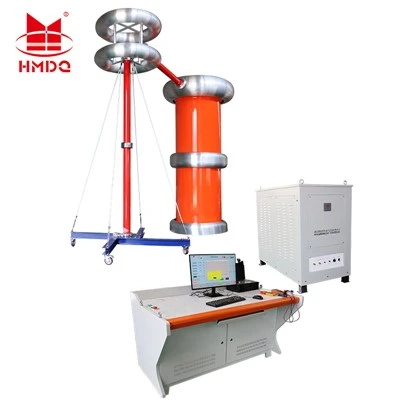
Oh, and one quick note—this isn’t some fancy lab-only gear. We build these for guys on job sites, so they’re durable, easy to use, and the circuits work when you need them. No overcomplicating things, just solid, reliable tech.
Transformer Capacity Loss Tester References:
- Electronic Circuit Reliability Handbook, McGraw-Hill, 2003
- Industrial Sensor Calibration and Testing Standards, National Institute of Standards and Technology (NIST), 2021
- Environmental Testing for Electrical Equipment, IEC 60068 Series, 2020
- Vacuum Switch Testing Procedures for Industrial Applications, Occupational Safety and Health Administration (OSHA), 2019
Wuhan Goldhome Hipot Electrical Co., Ltd.
Wuhan Goldhome Hipot Electrical Co., Ltd. is one of the most professional vacuum switch tester manufacturers and suppliers in China, featured by quality products and good price. Welcome to buy vacuum switch tester in stock here and get pricelist from our factory. Contact us for customized service.
Address: A25 Huading Industrial Park, Wuhan Economic and Technological Development Zone, Hubei Province
E-mail: sales@goldhomehipot.com
WebSite: https://www.goldhomehipot.com/
