As a long – standing carbon steel bar supplier, I’ve witnessed firsthand the importance of understanding the common defects in carbon steel bars and effective detection methods. Ensuring the quality of our products is not only a matter of business reputation but also of safety and performance for our clients. Carbon Steel Bar

Common Defects in Carbon Steel Bars
Surface Cracks
Surface cracks are one of the most prevalent defects in carbon steel bars. These can occur due to several factors during the manufacturing process. For example, improper cooling rate after hot – rolling can lead to thermal stresses that cause cracks on the steel surface. If the steel bar is cooled too quickly, the outer layer contracts more rapidly than the inner core, generating tensile stresses on the surface that can exceed the material’s strength, resulting in cracks.
In addition, mechanical forces during handling and transportation can also cause surface cracks. Rough handling, such as dropping or excessive impact, can initiate cracks on the already stressed surface of the steel bar. Surface cracks are a significant concern because they can act as stress concentrators, potentially leading to premature failure of the steel bar under load.
Inclusions
Inclusions are non – metallic particles present in the carbon steel bar. They are generally a result of the steelmaking process, where impurities such as oxides, sulfides, and silicates are not completely removed. For instance, during the smelting of iron ore to produce steel, some of the ore impurities and the slag used in the refining process may get trapped in the molten steel and remain in the final product as inclusions.
Inclusions can have a negative impact on the mechanical properties of the carbon steel bar. They can reduce the ductility and toughness of the steel, making it more prone to fracture. In high – stress applications, inclusions can act as crack initiation points, weakening the overall structural integrity of the steel bar.
Internal Cracks
Internal cracks are more difficult to detect than surface cracks but can be equally, if not more, dangerous. These cracks can form due to segregation during solidification. Segregation occurs when different chemical elements in the molten steel separate during the cooling process, leading to variations in composition and mechanical properties within the steel bar. This non – uniformity can create internal stresses that result in cracking.
Another cause of internal cracks is hydrogen embrittlement. Hydrogen can be introduced into the steel during the manufacturing process, for example, in the pickling or electroplating operations. The hydrogen atoms can diffuse into the steel lattice and accumulate at stress concentration sites, reducing the material’s ductility and causing internal cracks to form.
Decarburization
Decarburization is the process in which the carbon content on the surface of the carbon steel bar is reduced. This usually happens when the steel is heated in an oxidizing atmosphere, such as air or steam. At high temperatures, the carbon in the steel reacts with oxygen to form carbon monoxide or carbon dioxide, which escapes from the steel surface.
Decarburization can significantly affect the surface hardness and wear resistance of the carbon steel bar. Since the carbon content is responsible for the hardening properties of steel, a reduction in carbon on the surface reduces the ability of the steel to be hardened through heat treatment. This can lead to premature wear in applications where surface hardness is crucial, such as in machinery parts.
Detection Methods for Carbon Steel Bar Defects
Visual Inspection
Visual inspection is the most basic and widely used method for detecting surface defects in carbon steel bars. It involves a direct examination of the steel bar’s surface with the naked eye or with the aid of magnifying glasses. This method can easily identify large – scale surface cracks, scratches, and visible inclusions.
Inspectors look for discontinuities, such as changes in color, shape, or texture on the surface of the steel bar. For example, a surface crack may appear as a dark line or a groove on the steel surface. Visual inspection is cost – effective and can be performed quickly, making it suitable for initial quality checks during production and before shipment.
Magnetic Particle Inspection (MPI)
Magnetic particle inspection is a non – destructive testing method commonly used to detect surface and near – surface defects in ferromagnetic materials, such as carbon steel bars. In this method, the steel bar is magnetized, and iron particles are applied to its surface. If there is a defect, such as a crack, the magnetic field around the defect will be distorted. This distortion causes the iron particles to accumulate at the defect site, making it visible.
MPI is very sensitive to surface and near – surface cracks, even those that are very small. It can detect cracks that may not be visible to the naked eye during a visual inspection. However, this method is limited to detecting defects close to the surface and requires proper magnetization of the steel bar.
Ultrasonic Testing (UT)
Ultrasonic testing is a powerful non – destructive testing technique used to detect internal defects in carbon steel bars. High – frequency sound waves are transmitted into the steel bar, and any discontinuities, such as internal cracks or inclusions, will reflect the sound waves. The reflected waves are then detected and analyzed to determine the location, size, and nature of the defect.
This method can detect defects deep within the steel bar, making it ideal for detecting internal cracks and hidden inclusions. Ultrasonic testing is highly accurate and can provide detailed information about the internal structure of the steel bar. However, it requires trained operators and specialized equipment, and the results can be affected by the material’s microstructure and the presence of multiple interfaces.
Eddy Current Testing (ECT)
Eddy current testing is another non – destructive testing method used for detecting surface and near – surface defects in conductive materials, including carbon steel bars. An alternating current is passed through a coil, which generates an alternating magnetic field. When the coil is brought near the steel bar, eddy currents are induced in the material.
If there is a defect on the surface or near – surface of the steel bar, it will disrupt the flow of eddy currents, causing a change in the impedance of the coil. This change is detected and analyzed to determine the presence and characteristics of the defect. Eddy current testing is fast, sensitive to surface defects, and can be easily automated for high – volume production.
Importance of Defect Detection for Our Customers
As a carbon steel bar supplier, we understand that the quality of our products directly impacts the success of our customers’ projects. Defects in carbon steel bars can lead to costly failures, safety hazards, and production delays. By ensuring that our products are thoroughly inspected for defects, we provide our customers with peace of mind and high – quality materials that meet their specifications.
For construction projects, the use of defective carbon steel bars can compromise the structural integrity of buildings and bridges. Cracks or inclusions in the steel can lead to sudden failures, endangering the lives of workers and the public. In the manufacturing industry, defective steel bars can cause equipment breakdowns, resulting in production interruptions and financial losses.
By implementing strict quality control measures and using advanced defect detection methods, we can guarantee that our carbon steel bars meet the highest industry standards. Our customers can rely on our products to perform consistently and safely in their applications.
Contact Us for Partnership
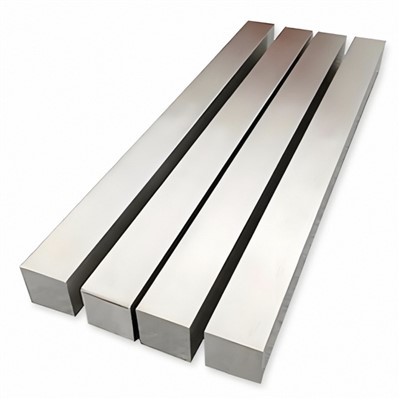
We at our company are committed to providing the best – quality carbon steel bars in the market. Our expertise in defect detection ensures that every bar we supply is of the highest standard. Whether you are involved in large – scale construction projects, manufacturing operations, or any other industry that requires carbon steel bars, we can offer you reliable solutions.
Stainless Steel Plate If you are interested in learning more about our carbon steel bars or would like to discuss a potential purchase, we encourage you to reach out to us. Our team of experts is ready to answer your questions and provide you with detailed product information. Get in touch with us today to start a successful partnership and ensure the superior performance of your projects.
References
- "Steel: Processing, Structure, and Performance" by George Krauss. This book provides in – depth knowledge on the manufacturing processes of steel and the factors that can lead to defects.
- "Non – Destructive Testing Handbook" edited by Robert McMaster. It offers comprehensive information on various non – destructive testing methods used for detecting defects in materials, including carbon steel bars.
- ASTM International Standards for Carbon Steel Bars. These standards define the quality requirements and testing procedures for carbon steel bars, ensuring uniformity and reliability in the industry.
Shanxi Midas Industrial Co., Ltd.
We’re known as one of the most professional carbon steel bar manufacturers and suppliers in China. With abundant experience, we warmly welcome you to buy cheap carbon steel bar made in China here from our factory. For price consultation, contact us.
Address: 28th, Huanqiu Jinrong Zhongxin, Xieyuan Road, Changfeng Business District, Taiyuan City, Shanxi Province, China
E-mail: midassteel@163.com
WebSite: https://www.midassteel.com/
